

Countless tragic, cheerful or eerie myths and legends surround the Fichtel Mountains – tales of old castles, helpful forest spirits, magical treasures, demonic…
The legends of the Fichtel Mountains show familiar places in a new and fascinating light.
The Bummelhenker
Throughout the region, the people of Weißenstadt are known as the Bummelhenker (“bull hangers”). The name goes back to one of the most famous legends of the Fichtel Mountains.
Long ago, a great deal of grass grew on the wall of Weißenstadt’s church tower. To make use of it – people here have always been thrifty – the town council decided to let the Bummel, the community’s breeding bull, graze on it, since mowing it would be too much trouble. So they threw a rope over the wall, looped it round the neck of the animal on the other side and began to pull. The councillors and the mayor had hauled the Bummel halfway up when he stuck his tongue far out. “He can already taste the grass!” cried a quick-witted townsman. But when they finally had him up on the ledge of the wall, he no longer stirred – he had choked to death.
And so the people of Weißenstadt were stuck with their nickname: “Bummelhenker”.
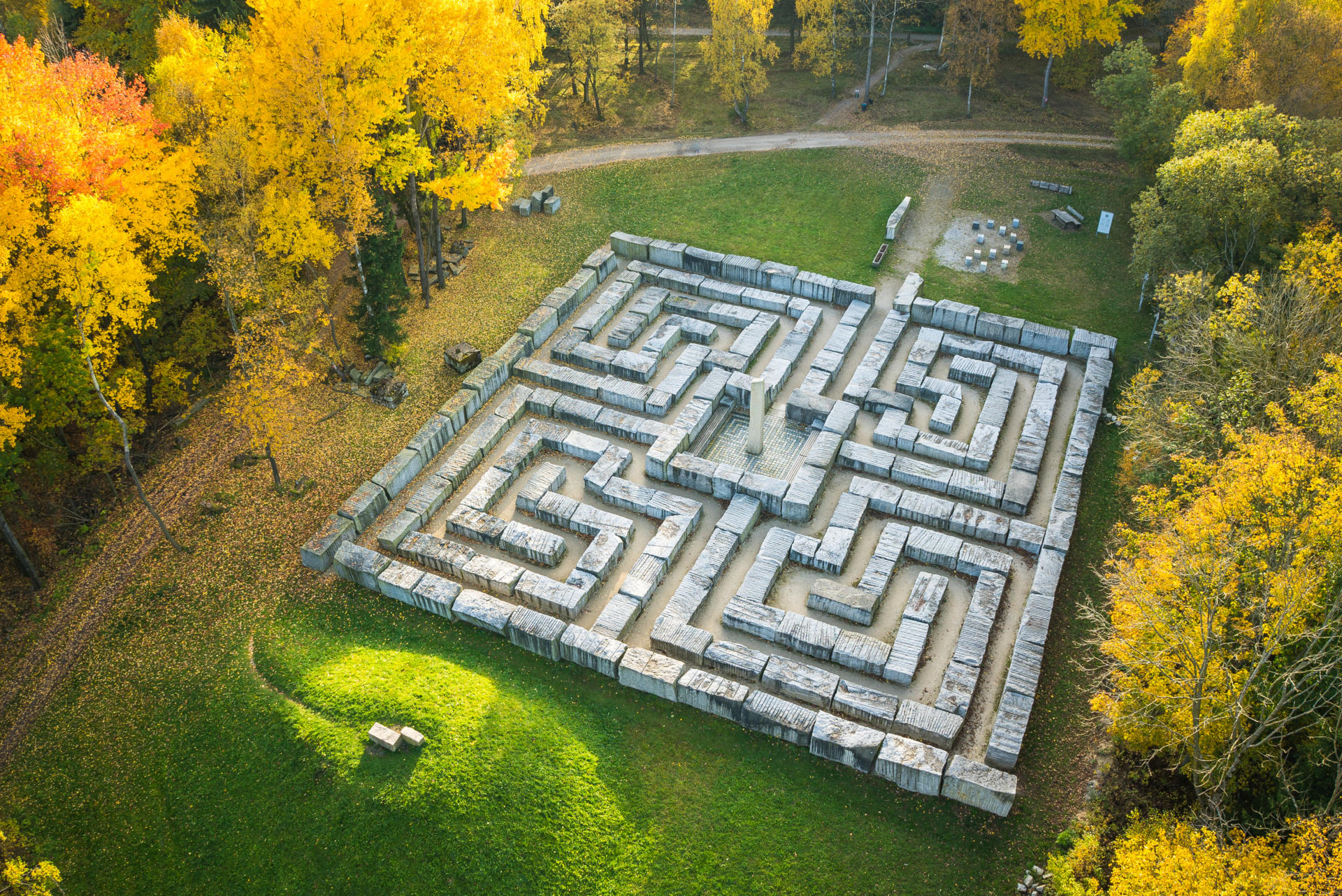
You can still read the story today on the town wall, next to our stone “Bummel”.


The Epprechtstein above Kirchenlamitz
Once every year, though never on a fixed day, while the pastor in Kirchenlamitz is praying the Lord’s Prayer from the pulpit, a rock rises and, until the prayer is over, reveals great heaps of gold. At the word “Amen” it sinks down again, and the immeasurable treasure is locked away for another year. Although no one has yet been chosen to catch this lucky moment and snatch a share, a few people did come by some of the riches long ago, in the following way: A shepherd was once grazing his flock not far from the ruins and stretched out carefree on the soft grass. Suddenly he heard a noise close by. He looked up and saw a girl in strange clothes, busily turning over fallen leaves with her rake. She beckoned to the shepherd in a friendly way. When he had shyly drawn near, she stuffed all his pockets full of leaves and vanished. An eerie dread came over the shepherd; he turned to his flock and drove it home as fast as he could. When he reached his family, he told them of the strange event and put his hand in his pocket to show them the leaves. But – who could describe his astonishment! – every leaf had turned into a large, shining gold coin! – Had night not already been at the door, he would have rushed straight back up the mountain to fetch all the leaves he could carry. That night was the longest of his life; he could not sleep a wink. Scarcely had dawn broken when he ran up the mountain with a large sack and approached the ruins with a pounding heart; but – everything had vanished, and never again in his life did the gold-giving woman appear to him.
The Legend of the Ochsenkopf and the Hankerlgrube
Two places in particular have become famous in legend: the crown of the mountains, the Ochsenkopf, and the pits to the south known as the Hankerlgruben. According to legend, there is a chapel on the Ochsenkopf, the Ghost Chapel, directly beneath the rock that faces the church of Bischofsgrün, filled with endless treasures of gold and precious stones. On St John’s Day, when the pastor of Bischofsgrün proclaims the Gospel from the pulpit, the chapel opens, only to close again when the Gospel reading ends. Woe betide anyone who misses the moment: he will be held fast inside. But happy is he who knows how to use the brief time: he returns home laden with riches. – On this day a single flower of its kind grows there: it is the key that opens the chapel. Many hundreds of years ago, several country folk from the area managed to find it and open the chapel: they could not get their fill of the splendours inside; the altars and pulpit were of gold, the pillars of silver, set with precious stones. – Once it rained on this day, and the charcoal burner, wanting to save his charcoal, had hurried into the forest just as the bells were ringing together. There he saw the chapel standing open, went in, and was met by the gleam of a golden altar. He ran home to fetch others, but the ringing came to an end, and all the charcoal burner heard was the sound of the chapel collapsing.
An enchanted castle full of treasure is also said to have sunk into this mountain. On St John’s Day, while the pastor reads and expounds the Gospel, it stands open to anyone who knows the way: the gold hangs down like icicles. – One man found a beautiful flower and carried it home; at home it turned into a key; thinking it must be the key to the castle, he went to the mountain, entered the castle and filled all his pockets with gold and silver, until someone called out: “Make haste and be gone, but do not forget the best!” In his fear and haste he left the key behind in the lock. The following year, at the same time, he found the way again: he went into the castle and lingered so long that he was locked in for a whole year. Yet it seemed to him no longer than three days.

The Legend of “Hell” on the Rudolfstein
A Silesian tippler.
On the northern slope of the Schneeberg, neighbour of the Fichtelberg and the Ochsenkopf, on the side facing Weißenstadt, there also stood a robber knights’ castle, the Rudolfstein or Rollenstein, whose site is still called the Schlossberg (Castle Hill). Rudolf, a count palatine in Franconia, is said to have built the castle in the year 857 on top of the giant rocks, which look like walls raised by human hands; others name Emperor Rudolf of Swabia as its builder. No fewer than twelve to fourteen robber castles stood around Wunsiedel, and like strong mountain winds their occupants blew the money out of the purses of travelling merchants. Robbers and ghosts, in cosy companionship, made the impassable area unsafe and notorious far and wide, and a spot in the forest below the Rudolfstein, hemmed in by gruesome rocky clefts, is called the Hölle (Hell). It lay midway between the robber castles of Rudolfstein and Waldstein, and travellers there often suffered more torment from the masked highwaymen lurking in the bushes than from the forest spirits and hellfires that appeared in the form of fire-breathing monsters, while a crashing was heard as if the whole forest were being smashed to the ground. A huntsman from Saxony who did not yet know about the ghostly goings-on in the Hölle saw some game there and pursued it as it fled up towards the Waldstein. The higher he climbed, the more game he caught sight of, but it all fled before him into the castle ruins, and none came within range. Now he, too, followed through the gate – and suddenly rock and wall, bush and tree were shrouded in grey mist, and in the castle courtyard there began a roaring, shrieking, banging and jingling, barking and yelling, as if all hell had broken loose, with screeching and laughter, and the Wild Huntsman appeared before him with the whole Wild Hunt, full of bewildering figures, until he fell to the ground and lost his senses entirely. When he awoke, it was dark around him, and down below in Reumersreuth the church clock was striking twelve.
The Bricks of the Waldstein
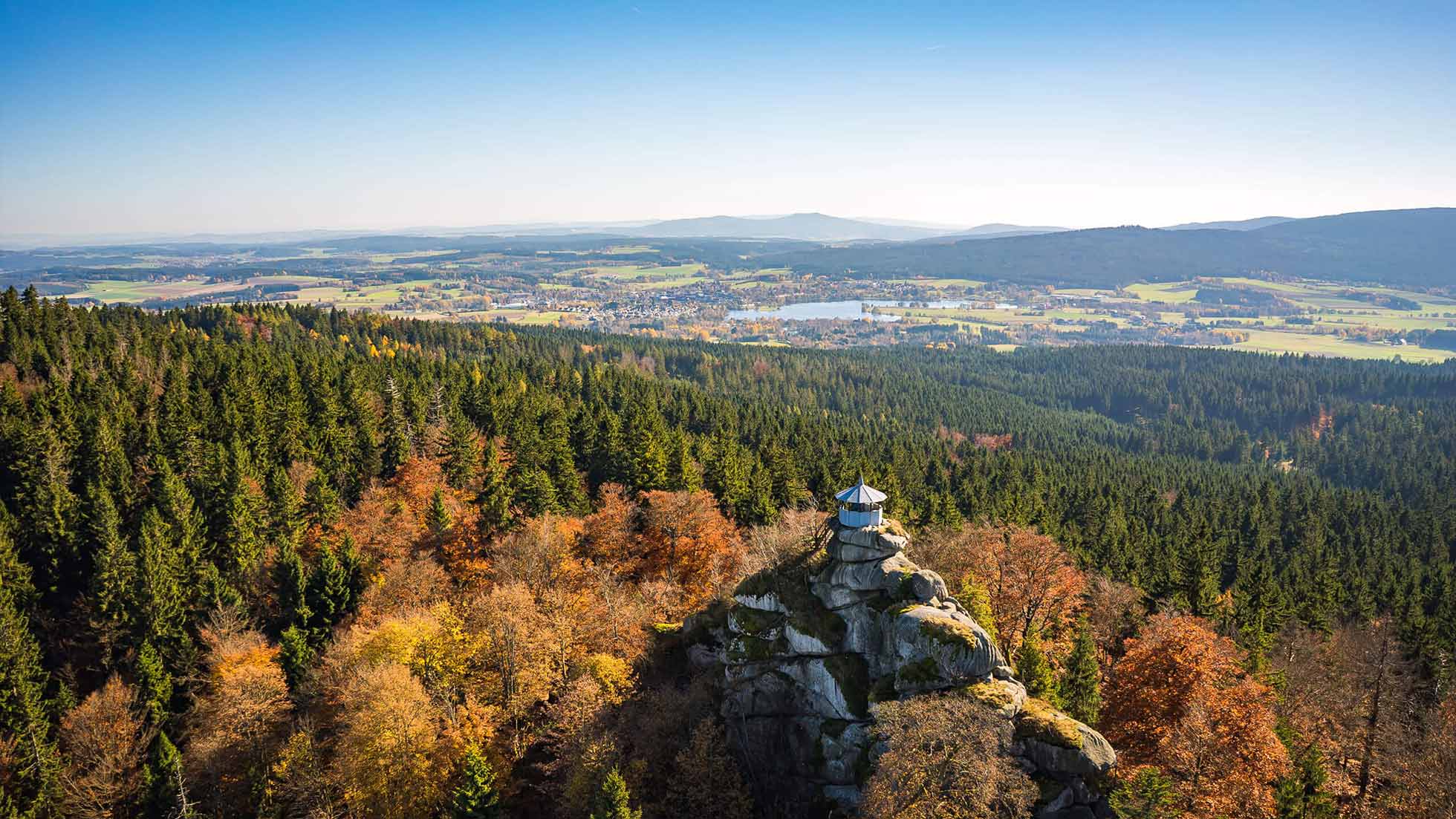
The most beautiful ruin on and among the enormous rocky giants of the Fichtel Mountains is the Waldstein, once the seat of the Lords of Sparneck, who kept their “money boxes” all around, in which they stored other people’s money – until their doings were brought to a terrible end. – A poor day labourer was once chopping wood very close to the old walls that still remained of Waldstein Castle, when a little man came up to him, very friendly, and handed him a brick, indicating with gestures that the man should take the brick home with him. The woodcutter was baffled and stood there like butter in the sun; he gaped open-mouthed and wide-eyed, slowly turned the stone in his hand and peered at it, and at last the big question occurred to him: Why should I take this brick home with me? – and since his homespun wits were not up to answering it, he wanted to put the question to the giver. But lo and behold: the little man had vanished. Once more the woodcutter turned the brick over and over and muttered: If it were a brick cheese, I’d like it better. All you get from this thing is red smears on your hands and clothes and nothing to show for it – spare me such tomfoolery! And with that he threw the brick into the bushes. When he got home, his wife cried out to him in amazement: “Well, man! You’re gleaming like a bacon rind! Did someone have you gilded in the fire?” – And all the brick dust that had stuck to his hands and clothes was pure gold dust. My, how quick the woodcutter was now! How he ran back up to the Waldstein! How he searched the bushes for the golden brick until nightfall! – But much good did it do him: he never found it again.