


St James’ Protestant Town Church
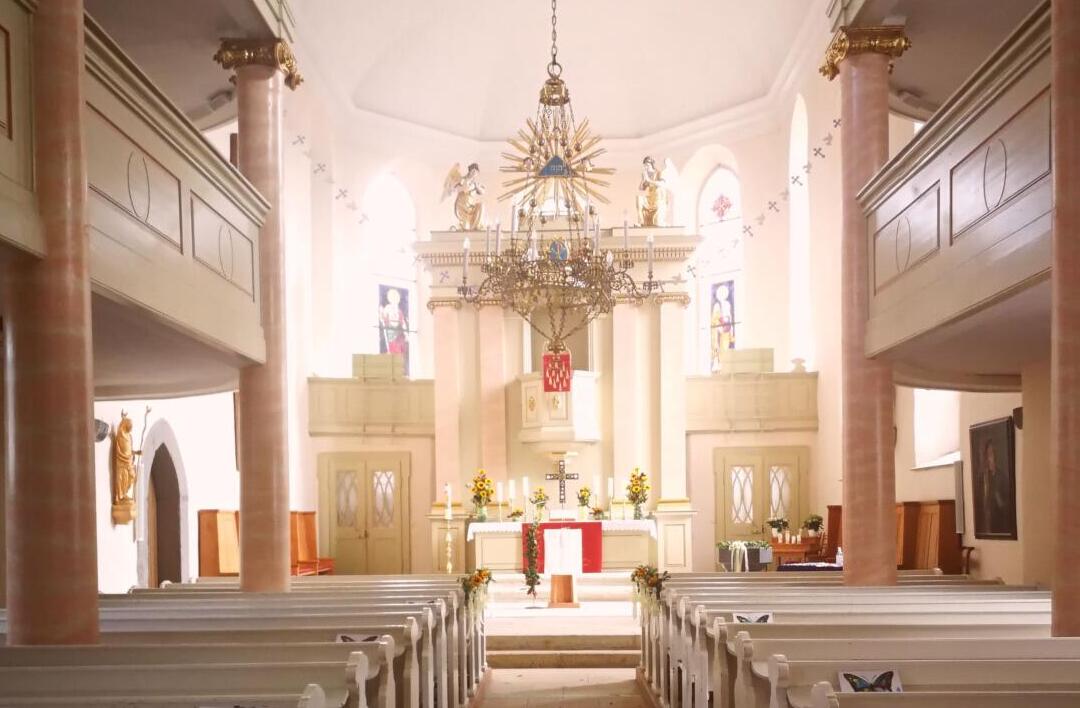
St James’ Protestant Town Church is very old. It stands in a central location on Weißenstadt’s market square.
Show transcript
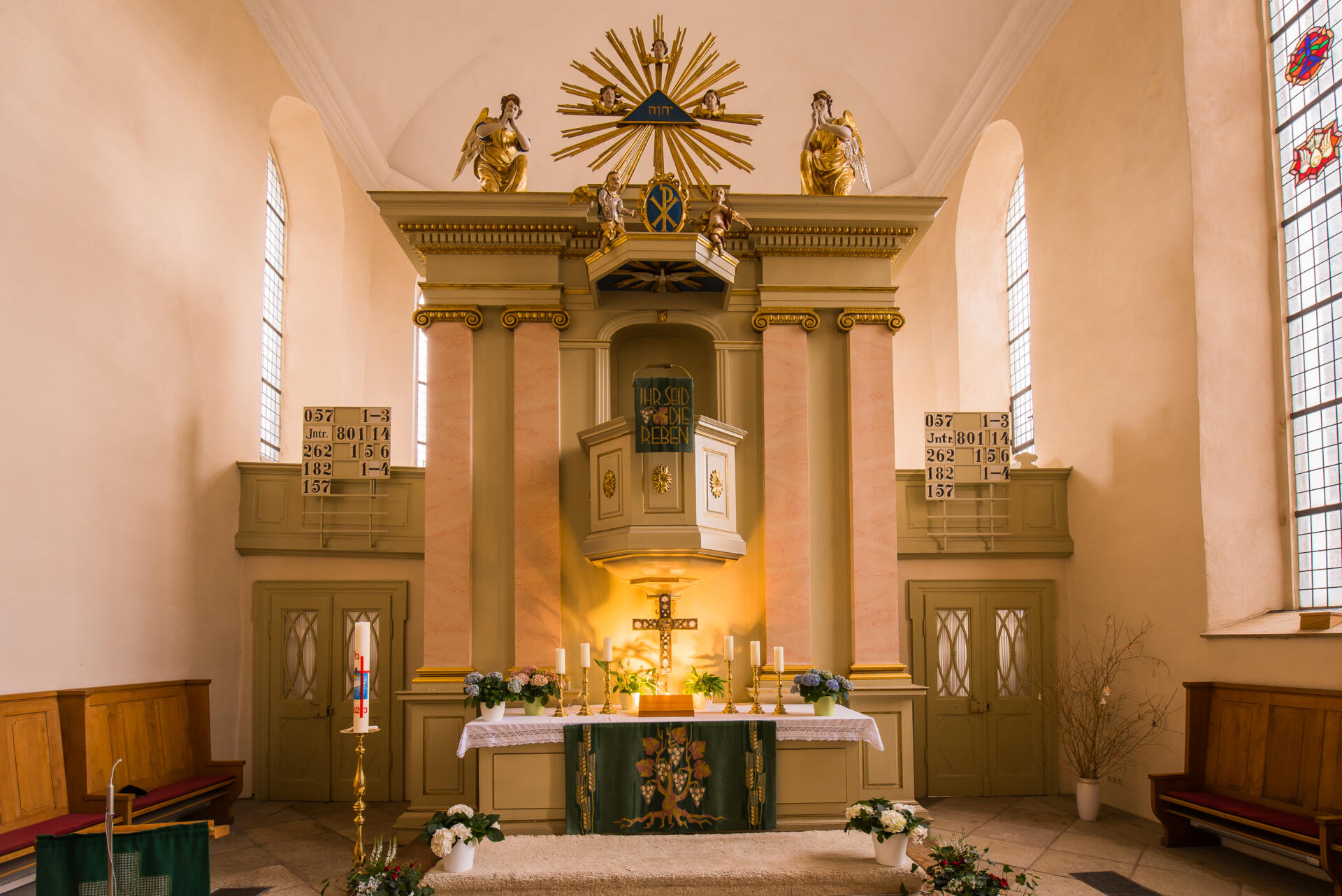
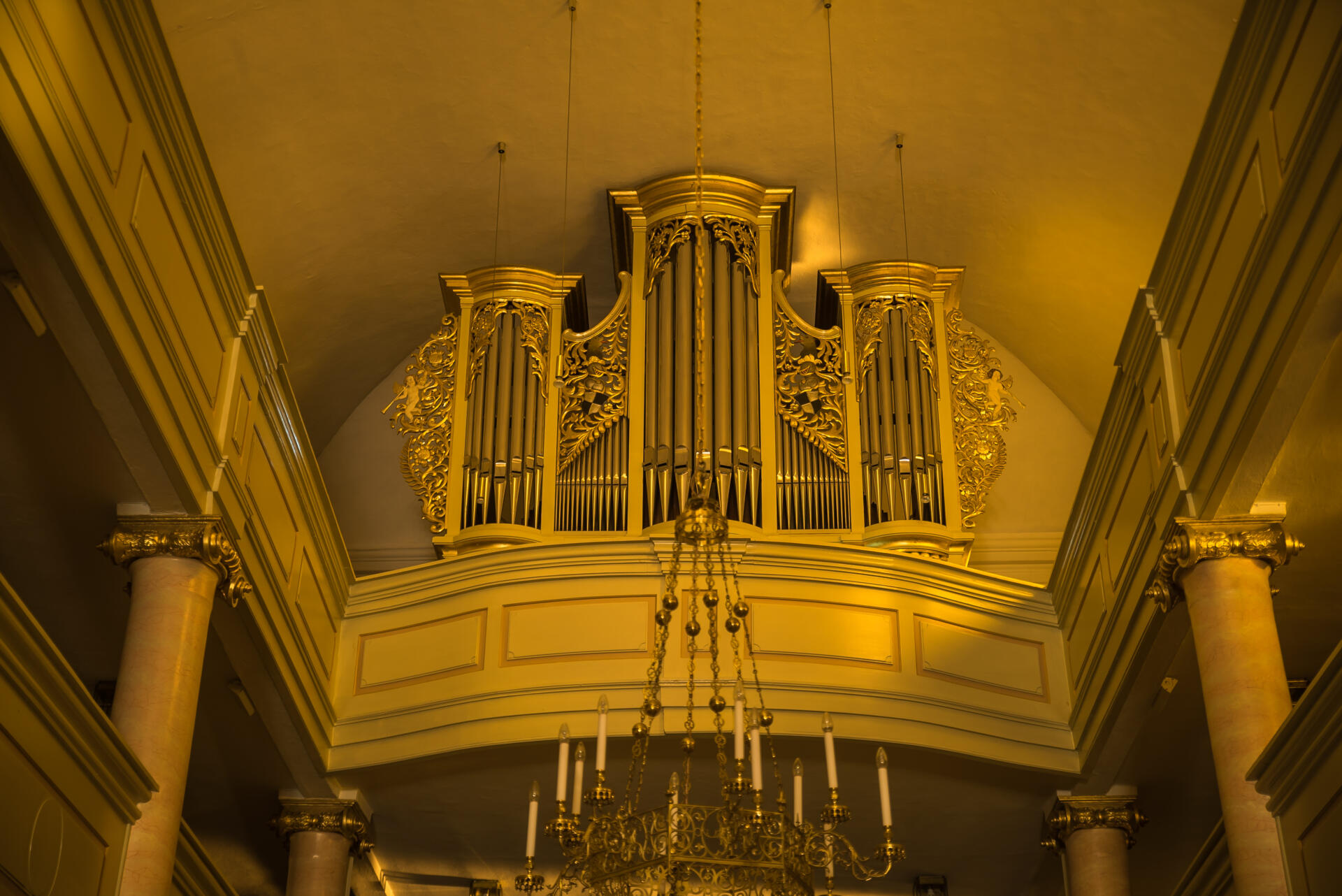
St James’ Town Church is very old. It was originally a church dedicated to the Virgin Mary. It is thought to have been built by Cistercians as a Romanesque basilica. Structural alterations were only made later, in the early 16th century. It was largely destroyed in the great town fire of 1823. Only the walls remained standing. On Reformation Day 1827 the church was reconsecrated. Since then, the spacious interior has been defined by the double galleries along the sides, elegantly rounded at the front. The pulpit altar was made of wood in the late Neoclassical style between 1827 and 1830 by the Wunsiedel joiner Johann Adam Opel. Today a section of the Way of St James begins here, passing the cemetery church, which was spared by the fire and whose Baroque furnishings have survived. The town church is a stately vaulted building with a late Gothic appearance and a refined late Neoclassical interior. Known as St Mary’s Church in pre-Reformation times, the church was named St James’ Church after its enlargement at the beginning of the 16th century. Only the chancel and the 39-metre tower of rubble masonry date back to the late Gothic period, around 1518. The lower sections of the nave walls date back to the Romanesque period. Its Gothic-style buttresses were rebuilt in 1716. Soon afterwards the walls were raised and closed with a Baroque vault. A particular highlight in terms of art history is the crystal cross standing on the altar, created in the 1950s by Professor Dr Hermann Jünger of Munich and decorated with 24 rock crystals from Weißenstadt. The portrait of Luther by the famous artist Christoph Wetzel shapes the Protestant church interior. There is also a Neo-Baroque organ with music-making angels and the Hohenzollern coat of arms, built in 1891 by the renowned organ builder G. F. Steinmeyer of Oettingen. Also worth seeing are the Neo-Gothic font from 1860 (donated by Erhard Ackermann), the large wooden crucifix from the 16th century and figures of the risen Christ and of the church’s patron saint, St James.
It was originally a church dedicated to the Virgin Mary. It is thought to have been built by Cistercians as a Romanesque basilica. Structural alterations were only made later, in the early 16th century.
It was largely destroyed in the great town fire of 1823. Only the walls remained standing. On Reformation Day 1827 the church was reconsecrated. Since then, the spacious interior has been defined by the double galleries along the sides, elegantly rounded at the front. The pulpit altar was made of wood in the late Neoclassical style in 1827–1830 by the Wunsiedel joiner Johann Adam Opel.
Today a section of the Way of St James begins here, passing the cemetery church, which was spared by the fire and whose Baroque furnishings have survived.
The architecture of the town church
The town church is a stately vaulted building with a late Gothic appearance and a refined late Neoclassical interior. Known as St Mary’s Church in pre-Reformation times, the church was named St James’ Church after its enlargement at the beginning of the 16th century. Only the chancel and the 39-metre tower of rubble masonry date back to the late Gothic period, around 1518. The lower sections of the nave walls date back to the Romanesque period. Its Gothic-style buttresses were rebuilt in 1716. Soon afterwards the walls were raised and closed with a Baroque vault.
Things to see in the town church
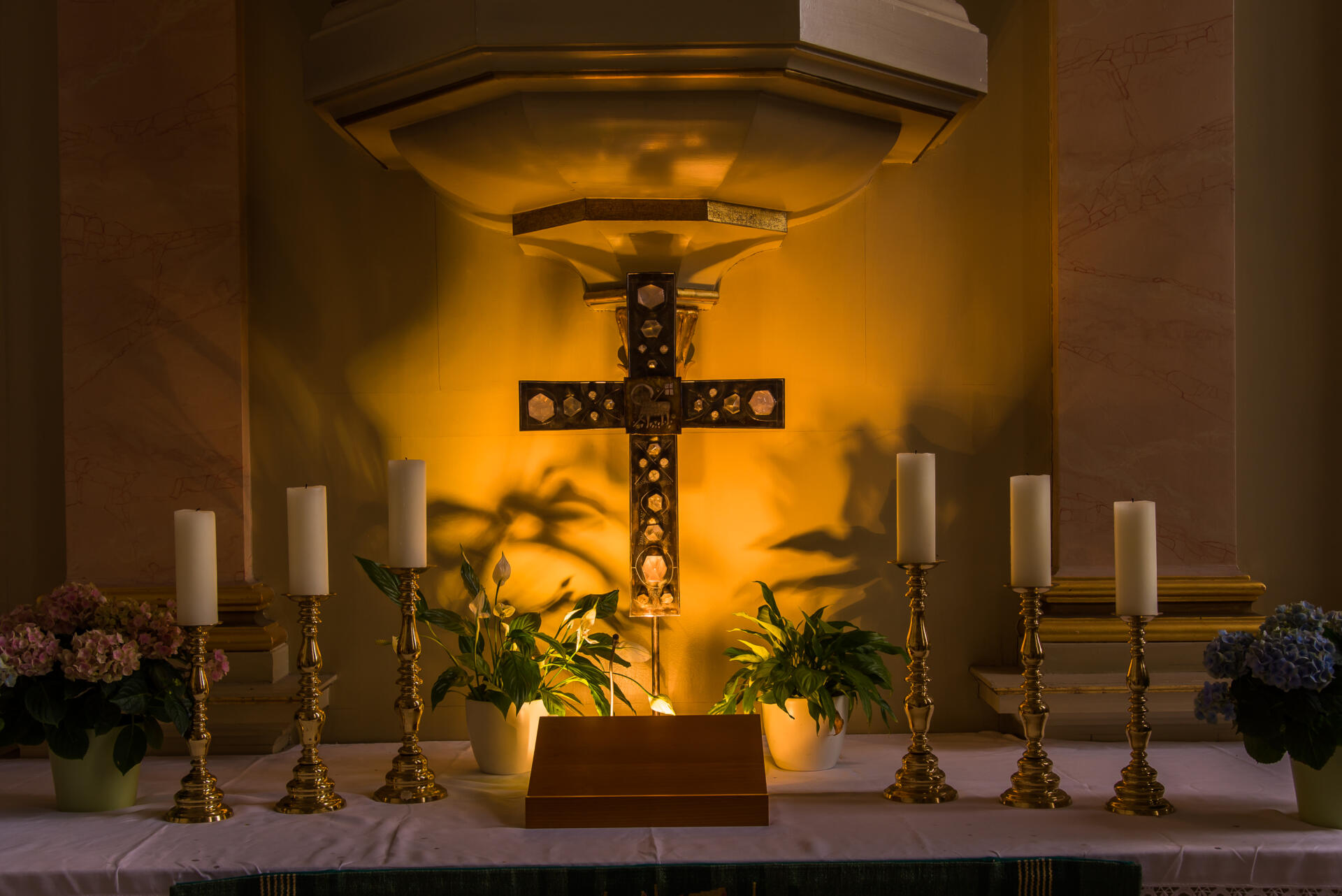
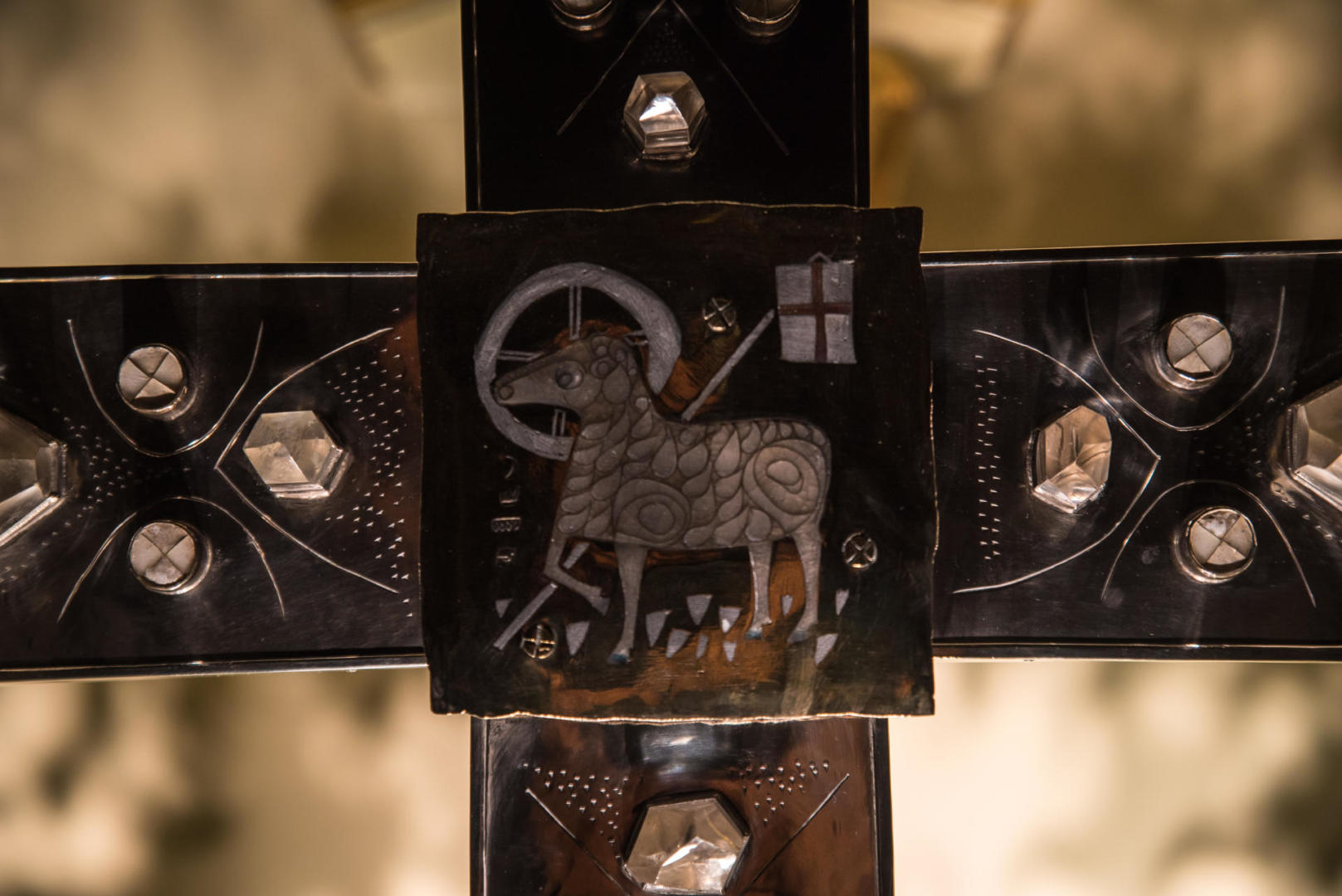
A particular highlight in terms of art history is the crystal cross standing on the altar, created in the 1950s by Prof. Dr Hermann Jünger of Munich and decorated with 24 rock crystals from Weißenstadt.
The portrait of Luther by the famous artist Christoph Wetzel, whose work includes the paintings in the dome of the rebuilt Frauenkirche in Dresden, shapes the Protestant church interior. It looks old but in fact only dates from 1999.
Worth seeing inside the church is the Neo-Gothic font from 1860, donated on the occasion of the baptism of his youngest daughter Margarete by Erhardt Ackermann, founder of Weißenstadt’s stone-polishing works and honorary citizen of the town. The large wooden crucifix from the 20th century, by the sculptor Josef Traxler of Kapsdorf near Schwabach, is carved from limewood. A wooden sculpture of the risen Christ and a figure of the church’s patron saint, St James, also characterise this church.
Opening times
The town church is open:
- Mon – Fri 8 am – 7 pm
- Sat & Sun 10 am – 7 pm
In winter, from October to March, the church closes at 5 pm.
Services in the town church
St James’ Town Church: Sun 9.30 am
Contact
- Protestant Lutheran Parish Office
Pfarrgässchen 3
Tel.: 09253 276
pfarramt.weissenstadt@elkb.de
www.weissenstadt-evangelisch.de
Pastor Lisa Keck
Second parish post: Pastor Markus Wandtke
Tel.: 09253 334
markus.wandtke@elkb.de - Diakonie nursing care service
Tel.: 09238 9791
Further information on the Protestant town church
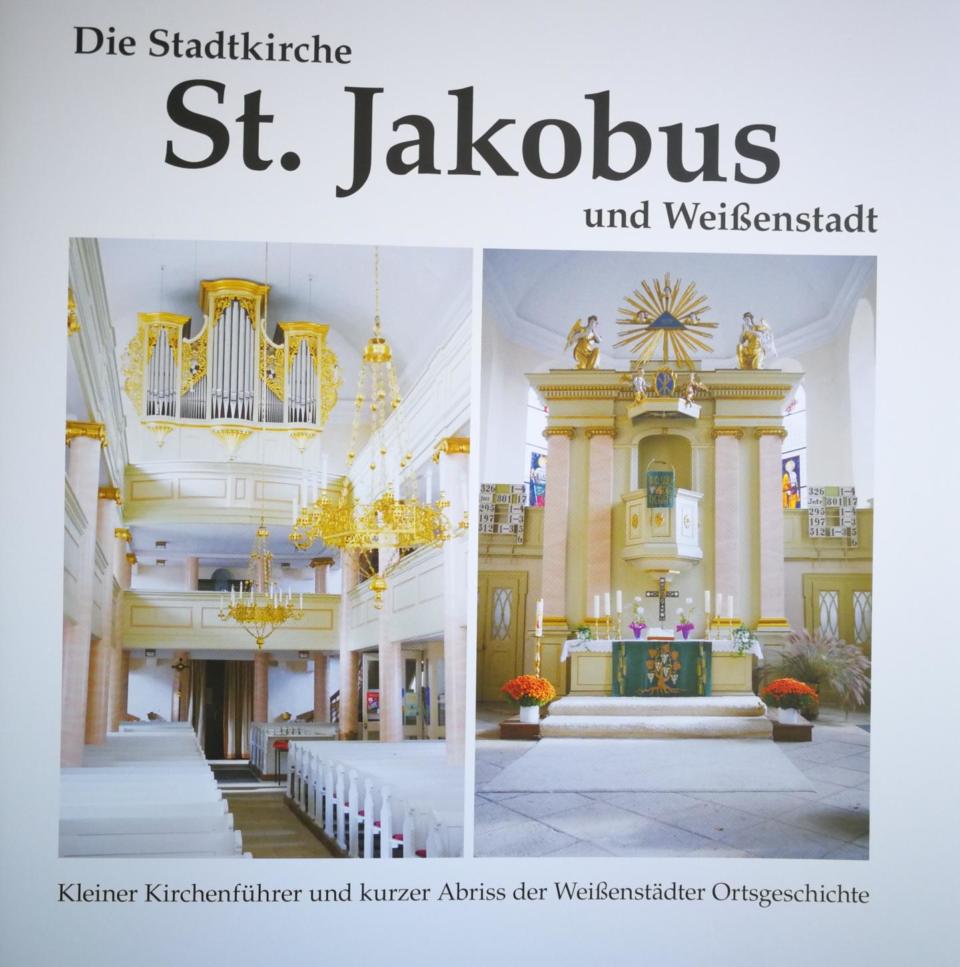
St James’ Town Church
The “Short Church Guide and Brief Outline of the Local History of Weißenstadt” is available for €5.00 from the Tourist Information.
Margravial Churches
You can find tourist information on pilgrim routes and the historical background of the churches in the region at www.markgrafenkirchen.de
Location
You are currently viewing a placeholder content from OpenStreetMap. To access the actual content, click the button below. Please note that doing so will share data with third-party providers.
More Information